

Fostering multi-actor exchange around Agricultural Knowledge and Innovation Ecosystems (AKIS): co-learning through training, networking, and good practice sharing at the University of Pisa
The University of Pisa hosted three complementary programmes at the Benedettine Congress Centre, from May 18th to 20th, 2026. The focus was on knowledge circulation and innovation, rural governance, and on strengthening concepts, tools, and awareness about the AKIS (Agricultural Knowledge and Innovation Systems) among several key actors: European and Italian agricultural consultants, regional officers, Local Action Groups (LAGs), rural districts, food communities, Wine Routes, scholars, university students and young researchers, and innovative start-ups.
The initiative included the International “Train the trainer” workshop under the Horizon Europe project ATTRACTISS – Empowering Innovation Support Services, held by Ana Allamand from the Soil Association (Scotland, UK) and supported by Cosimo Righini from CIA Toscana; the National “4AKIS training – Formazione per il Rafforzamento degli AKIS” moderated by the team of the CREA, with Patrizia Proietti, Simona Cristiano and Alberto Sturla, held in Italian; and the conference on the Interreg project “CambioVia Pro” titled “Towards a governance system for local communities: responsibilities, synergies and strategies serving the regions along the transhumance routes”.
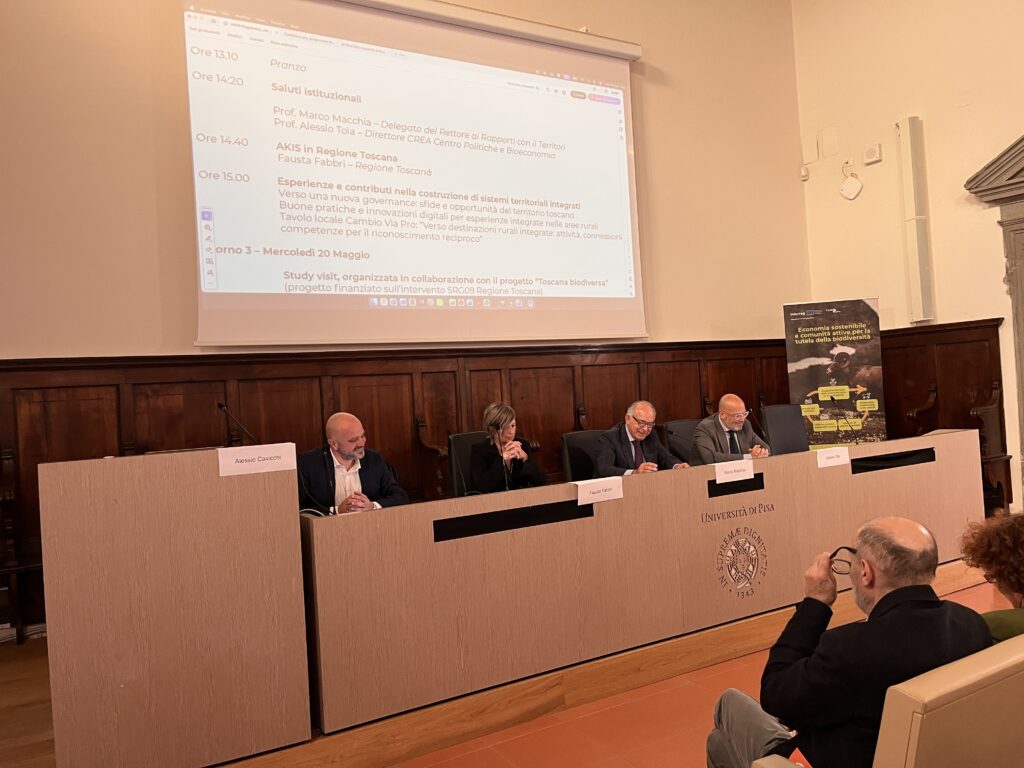
PAGE served as an anchor organisation, providing scientific and methodological guidance: Prof. Alessio Cavicchi and Dr. Chiara Mignani played the role of local coordinators in contact with the organising entities, stimulated and supported connections among the local, national, and international levels by engaging participants and rural networks and organisations with prior and long-lasting collaborations with the university.
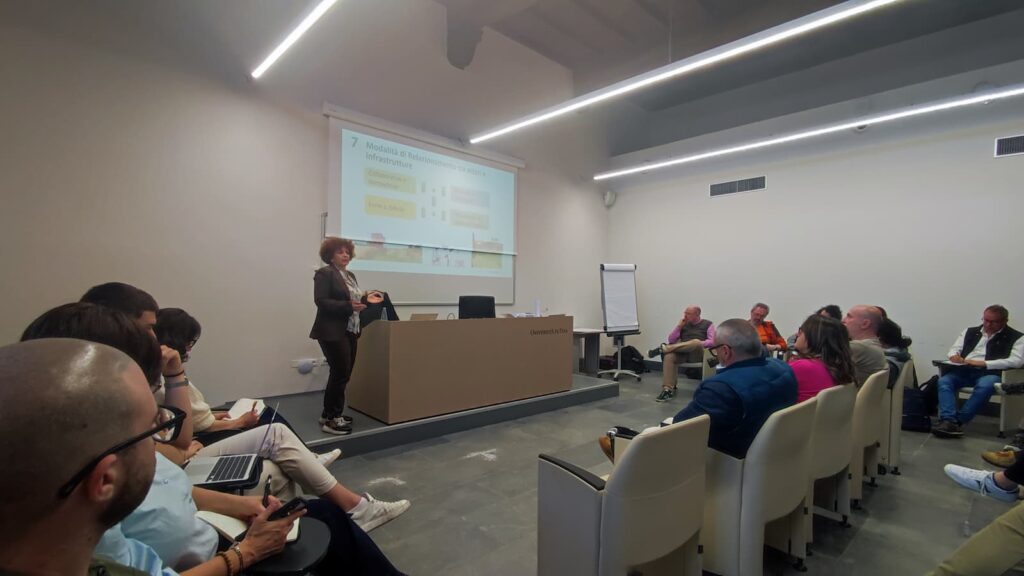
Some of the PAGE members, such as Dr. Fabio Lepore, also attended the training sessions and could apply the tools designed within the ATTRACTISS project, going through 7 key functions to manage and support interactive multi-actor innovation processes towards sustainable transitions in agriculture and forestry.
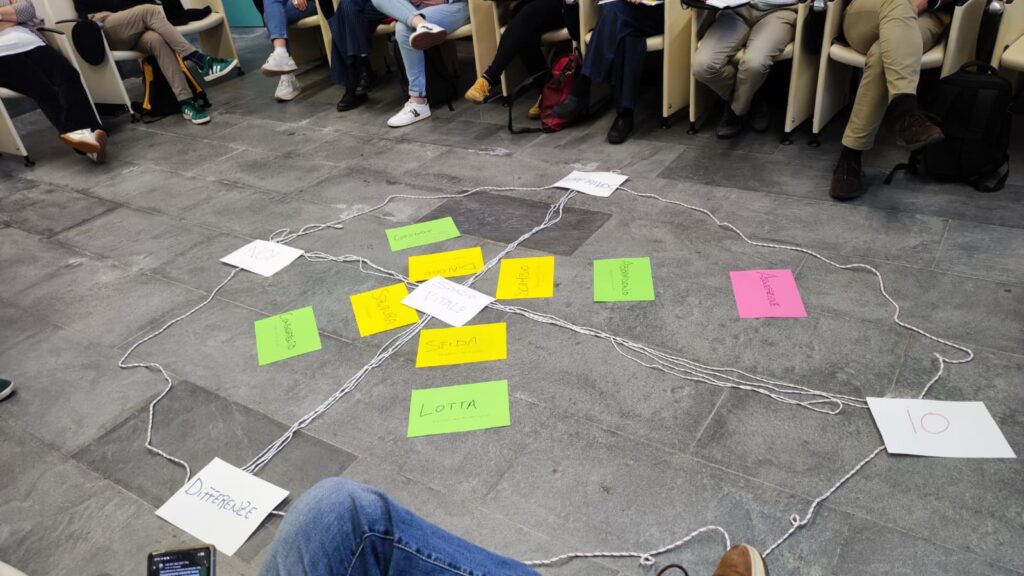
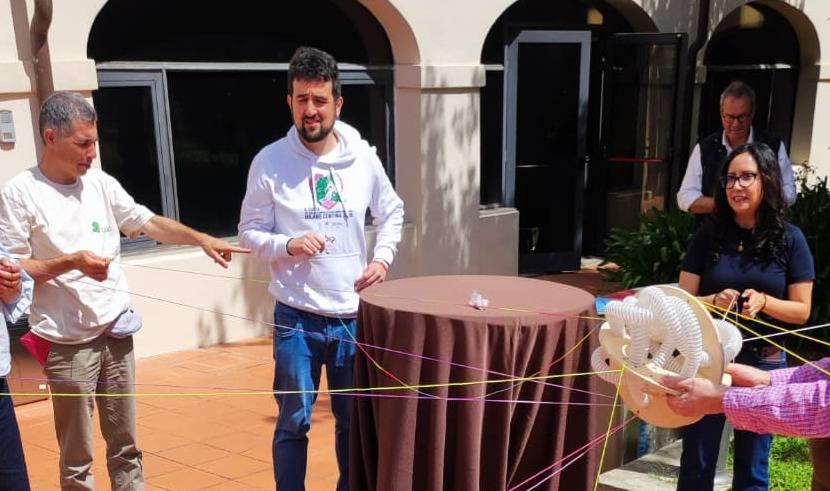
ATTRACTISS Tools and exercises from the training
Introduced by Prof. Alessio Cavicchi, the session focused on rural and agricultural-driven Living Labs (LLs)’ projects under the HORIZON 2020/Europe programmes as tools to foster multi-actor collaboration towards innovation.
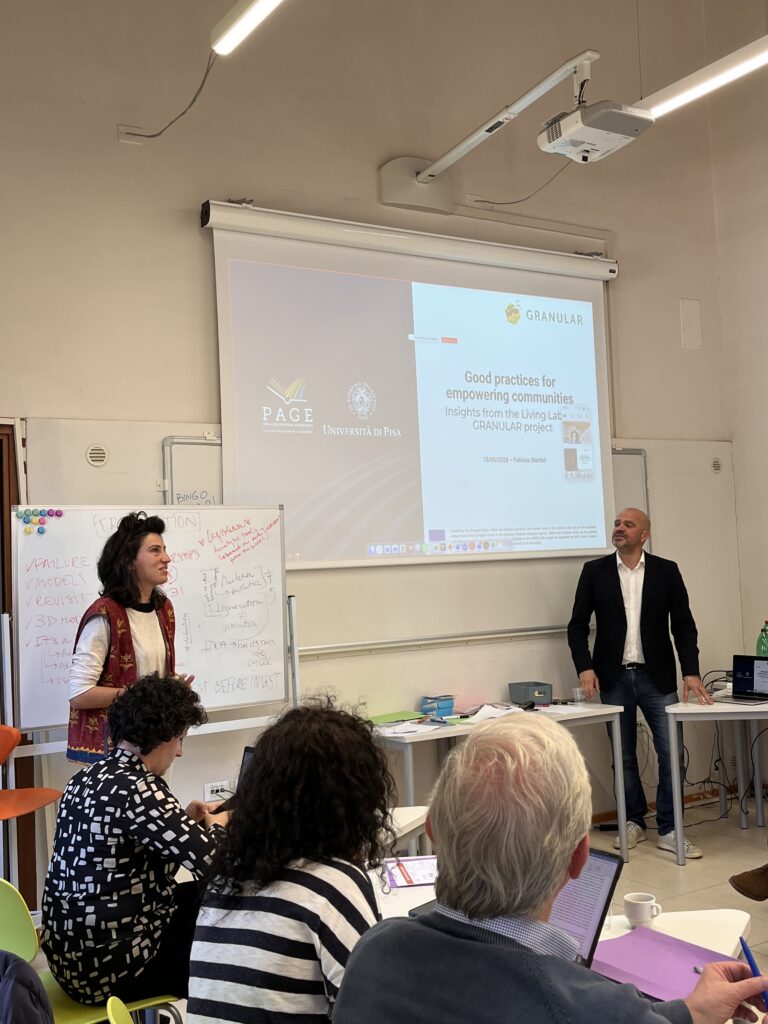
Fabiana Stortini shared “Good practices for empowering communities: Insights from the LLs of the GRANULAR project” with a focus on cross-visits as a tool to engage multiple actors and for exchanging knowledge and anchoring the projects in the territory.
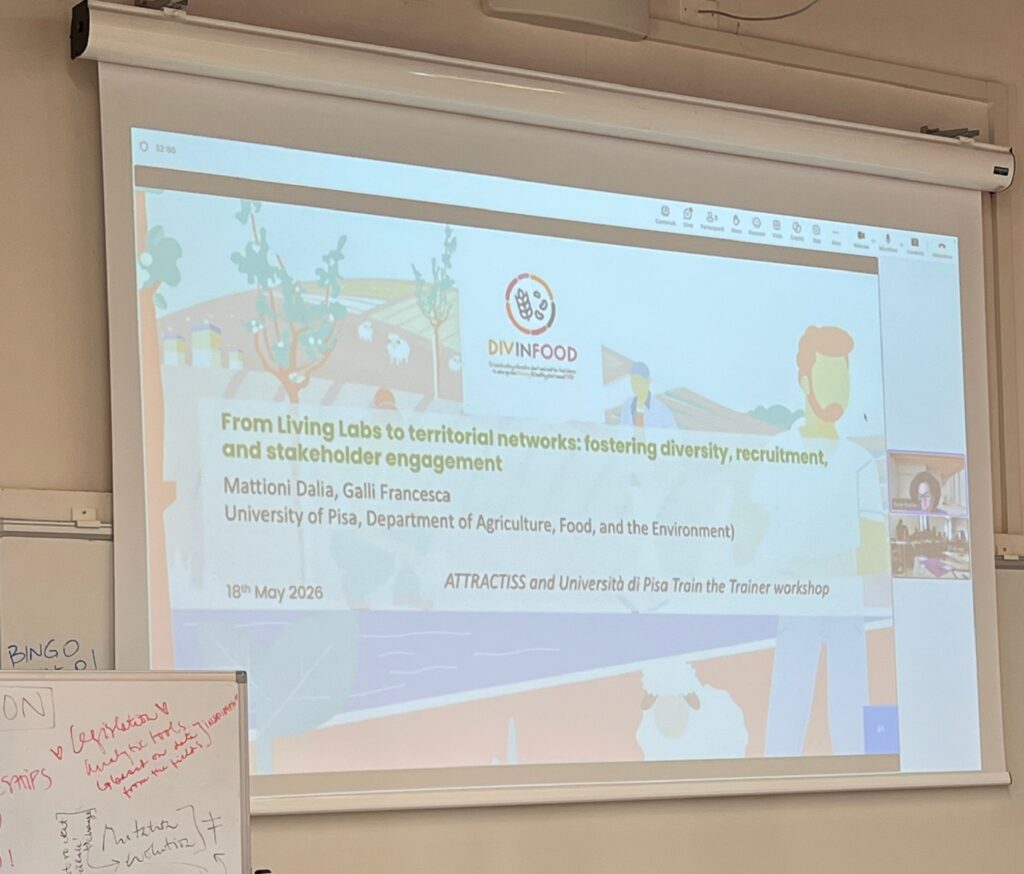
Dr. Dalia Mattioni highlighted the main features of LLs’ functioning connected to the experience in DIVINFOOD, with a contribution titled “From LLs to territorial networks: fostering diversity, recruitment, and stakeholder engagement”.
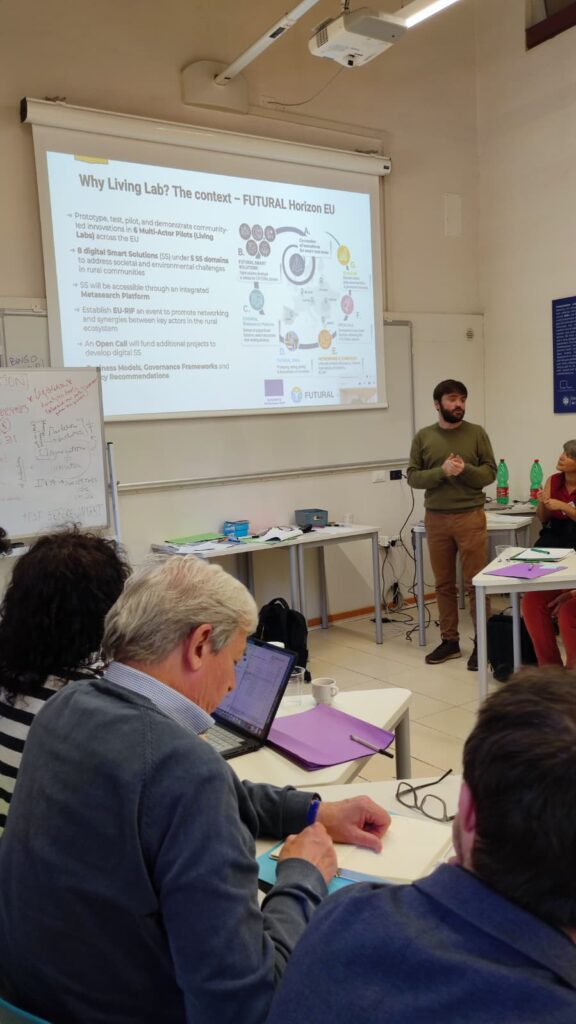
Dr. Carlo Giua addressed some concrete experiences connected to the ability of LL facilitators to engage participants in collaboratively reversing the controversies and transforming them into opportunities through co-planning. His contribution concerned the Futural project and was titled: “Digitalising rural areas through LLs: conflicts as transformative drivers”.
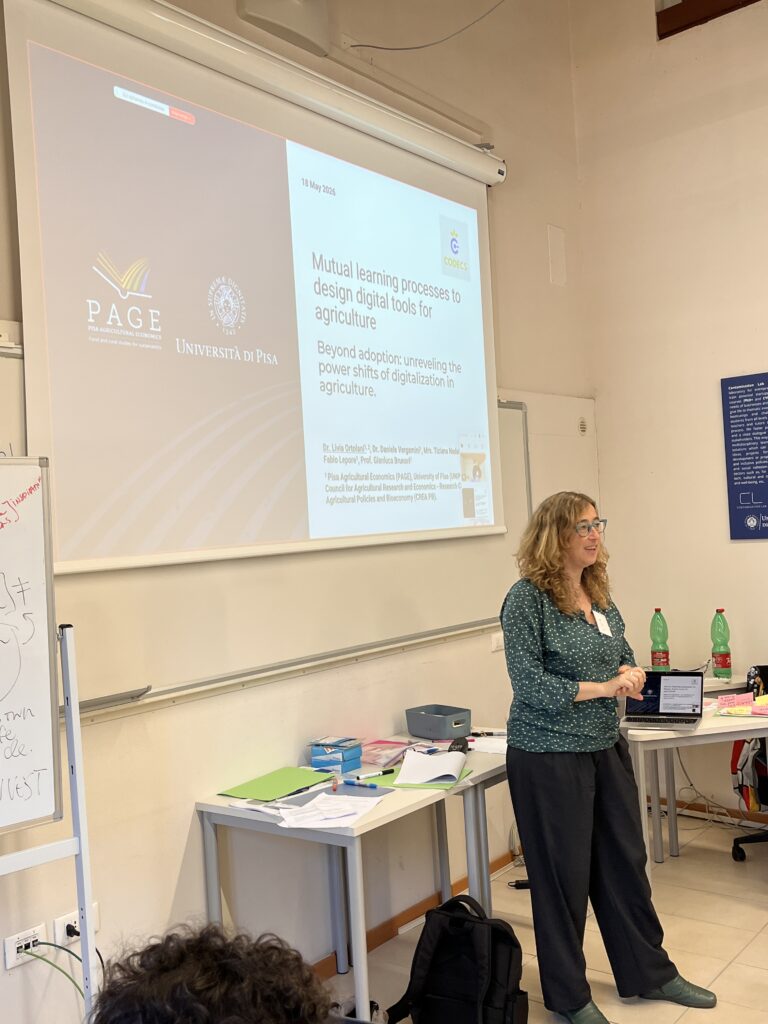
Dr. Livia Ortolani addressed the topic of collaborative co-design in digital innovation processes in her speech on “Mutual learning processes to design digital tools for agriculture: managing power shifts of digitalisation in agriculture”, based on the experience from CODECS.
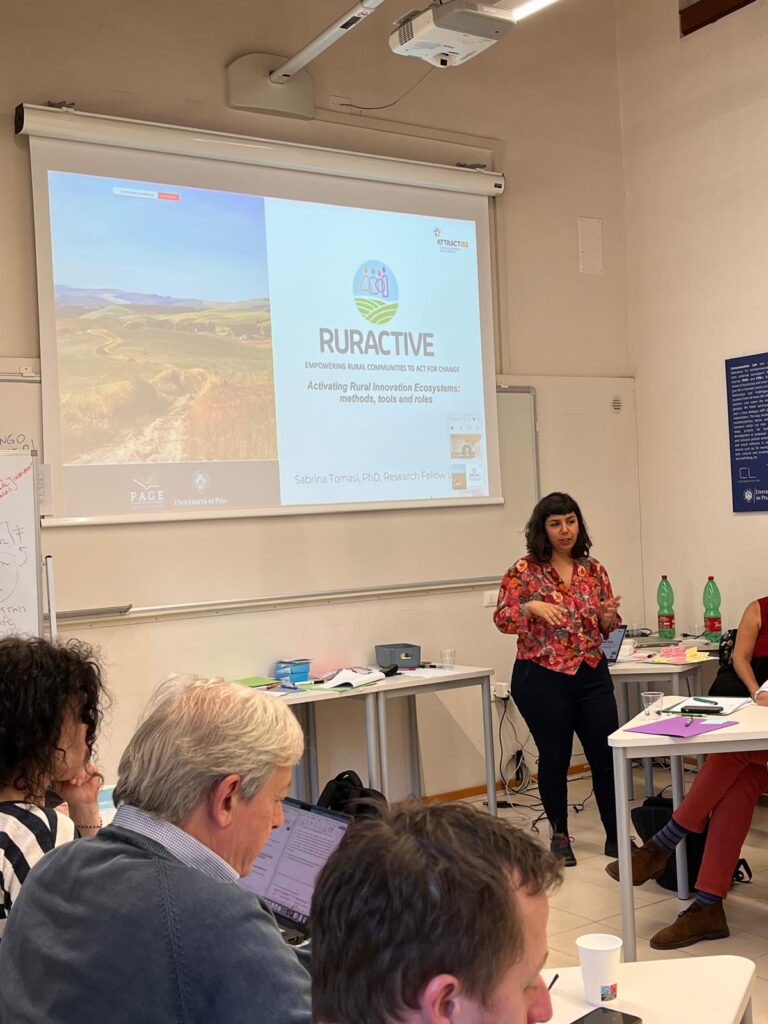
Dr. Sabrina Tomasi, focusing on the role of researchers as mentors within the RURACTIVE LLs and on the facilitator role rural communities themselves can take to foster innovation processes locally, focused on “methods, tools and roles” for “Activating rural innovation ecosystems”.
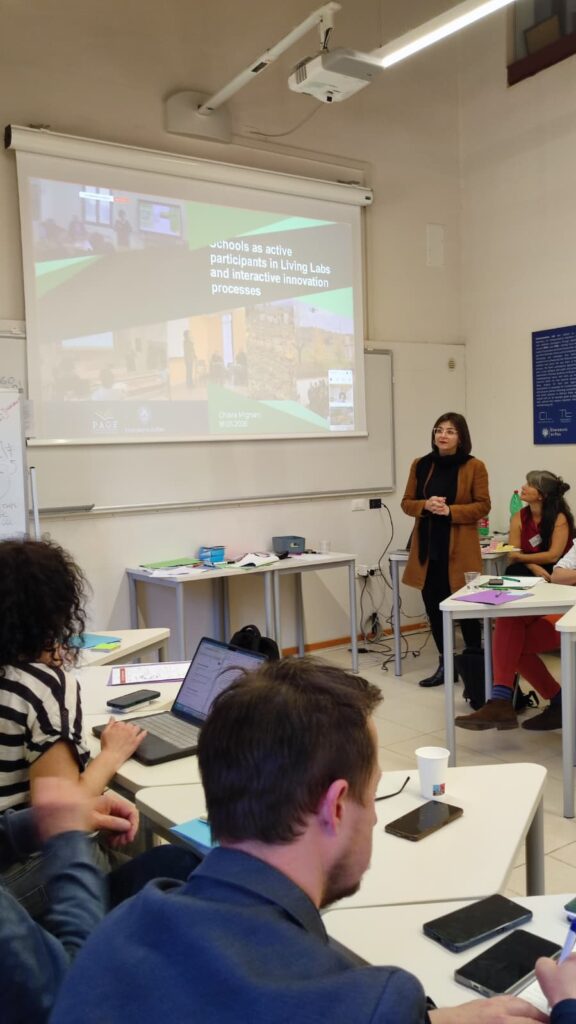
Finally, Dr. Chiara Mignani referred to the co-creation exchanges established within LLs between the university, schools, and local innovation actors under the Interreg projects INN-Pratica and CambioVia Pro, as well as in the LL activated by AMAP (Marche Region), with her intervention on “Schools as active participants in LLs and interactive innovation processes”.
The session ended with attendees commenting and asking questions, and with a final reflection that allowed them to link the concrete references from the experiences shared by the PAGE team with the key concepts learned by participants throughout the training journey on Innovation Support Services and to consider the potential of action research in supporting contextual innovation processes through collaborative approaches between universities and local actors.
